Last reviewed July 23, 2026
Resource Guide
What Is HVUT (Heavy Highway Vehicle Use Tax)? The Form 2290 Guide
Information current for the 2026–2027 tax period (July 1, 2026 – June 30, 2027) · Prior tax years (2025–2026 and earlier) preserved for historical reference · General information, not tax advice.
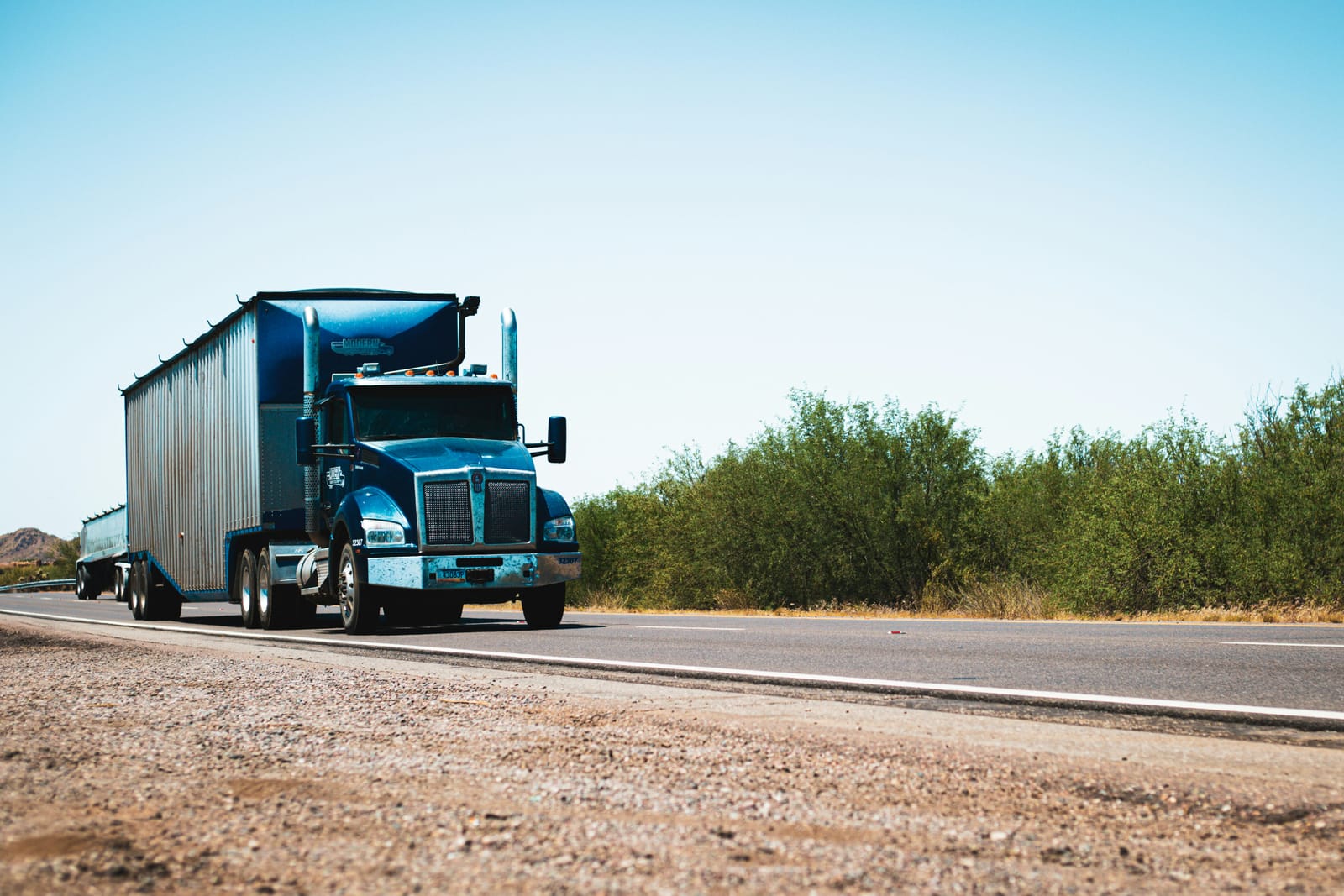
Photo: Tom Jackson on Unsplash · Unsplash License
HVUT stands for the Heavy Highway Vehicle Use Tax (also called the Heavy Vehicle Use Tax) — an annual federal tax the IRS collects on heavy highway motor vehicles, which you report and pay on Form 2290. If you operate a truck with a taxable gross weight of 55,000 pounds or more, this guide covers everything you need: who must file, how the tax is calculated, deadlines, special vehicle types, penalties, corrections, refunds, and how to e-file in minutes.
Truck at 55,000 pounds or more? You must file Form 2290 and carry a stamped Schedule 1 before your state will plate it.
Who Must File Form 2290?
You must file Form 2290 and pay the HVUT if a taxable highway motor vehicle is registered (or required to be registered) in your name and has a taxable gross weight of 55,000 pounds or more. This applies to:
- Owner-operators with a single truck
- Trucking companies and fleets of any size
- Businesses, LLCs, partnerships, and individuals that title qualifying vehicles
A "highway motor vehicle" generally includes trucks, truck tractors, and buses. Most pickups, vans, and similar light vehicles fall under the 55,000-lb threshold and are not taxable.
How Taxable Gross Weight Is Determined
Your taxable gross weight is the total of:
- The actual unloaded weight of the fully equipped vehicle, plus
- The unloaded weight of any trailers or semi-trailers customarily used with it, plus
- The weight of the maximum load customarily carried on the vehicle and those trailers.
How Much Is the HVUT?
The tax is based on taxable gross weight. The standard schedule works like this:
- 55,000 lbs: $100
- 55,001 – 75,000 lbs: $100 plus $22 for every 1,000 lbs over 55,000
- Over 75,000 lbs: $550 (the maximum)
Logging vehicles — used exclusively to transport products harvested from the forest — are taxed at reduced rates (for example, a vehicle that would owe $550 owes $412.50 as a logging vehicle).
Try it
Estimate your HVUT right now
HVUT applies to vehicles 55,000 lbs and over, Categories A to V.
The tax period runs July through June. Later first use means a lower prorated tax.
Estimated HVUT due
$550.00
Category V · $550.00 per vehicle × 1
First used July. Full period amount $550.00 per vehicle.
e-File Form 2290 Now →This estimate uses the IRS weight categories and partial period proration based on your first used month, matching the Form 2290 instructions. The exact tax is confirmed when you file. This is general information, not tax advice.
Tax Period & Filing Deadlines
The HVUT tax period runs July 1 through June 30 of the following year. Deadlines:
- Vehicles in use at the start of the period (operated in July): file by August 31.
- Newly purchased / first-used vehicles: file by the last day of the month following the month of first use. (Example: first used in November → due by December 31.)
What You Need to File
- EIN (Employer Identification Number) — required; an SSN cannot be used.
- VIN for each vehicle
- Taxable gross weight category for each vehicle
- First-used month for the tax period
- A payment method for the tax owed to the IRS (EFTPS, EFW, or card)
New to EINs? Apply at least about two weeks before filing so the number is active in IRS systems.
Your Schedule 1: Proof of Payment
Once the IRS accepts your return, you receive a stamped (watermarked) Schedule 1 listing your VINs. This is your official proof of HVUT payment, and states require it to register or renew your vehicle. With e-filing, you typically get your Schedule 1 within minutes of IRS acceptance.
File your Form 2290
Get your stamped Schedule 1 in minutes
Consulics is an IRS authorized e-file provider. File Form 2290 and get the proof your state needs, with free VIN corrections even after you file.
Special Vehicle Types
Suspended (Category W) vehicles: if a vehicle will travel 5,000 miles or less during the period (7,500 miles or less for agricultural vehicles), no tax is due — but you still file Form 2290 to report it. If it later exceeds the limit, the tax becomes due.
Agricultural vehicles: used primarily for farming, with a higher 7,500-mile suspension limit.
Logging vehicles: reduced tax rates, as noted above.
VIN Corrections & Amendments
- VIN correction: fix a mistyped VIN on an accepted return (free with Consulics).
- Taxable gross weight increase: file an amendment if a vehicle moves into a higher weight category during the period.
- Mileage exceeded: file an amendment if a suspended vehicle goes over its mileage limit.
Refunds & Credits (Form 8849)
If a vehicle was sold, destroyed, or stolen, or traveled under the mileage-use limit, you can claim a credit or refund using Form 8849, Schedule 6. Refunds are paid by check to the address on the claim.
Penalties for Late Filing
Filing late or paying late can trigger IRS penalties plus interest, and you may be unable to register your vehicle without an accepted Schedule 1. Filing on time — even for suspended vehicles — keeps you compliant and on the road.
How to E-File Your 2290 with Consulics
- Enter your business details and EIN.
- Add your vehicle(s): VIN, taxable gross weight, and first-used month.
- We calculate your HVUT automatically and check your return for common errors.
- Submit to the IRS and download your stamped Schedule 1 — usually within minutes.
Frequently Asked Questions
Who has to file Form 2290?
Anyone who registers, or is required to register, a highway motor vehicle with a taxable gross weight of 55,000 pounds or more in their name must file Form 2290 and pay the Heavy Vehicle Use Tax. This includes owner-operators, fleets, and businesses.
What is the deadline to file Form 2290?
The HVUT tax period runs from July 1 to June 30. For vehicles in use at the start of the period (used in July), Form 2290 is due by August 31. For a vehicle first used later in the period, the return is due by the last day of the month following the month of first use.
How much is the Heavy Vehicle Use Tax?
For most trucks the tax is $100 for a 55,000-lb vehicle, plus $22 for each 1,000 pounds above 55,000, up to a maximum of $550 for vehicles weighing 75,000 pounds or more. Logging vehicles are taxed at reduced rates (a $550 vehicle is $412.50 if used exclusively for logging).
Do I need an EIN to file Form 2290?
Yes. The IRS requires an Employer Identification Number (EIN) to e-file Form 2290 — a Social Security Number cannot be used. If you are applying for a new EIN, do so at least about two weeks before filing so it is active in IRS systems.
What is a Schedule 1 and why does it matter?
Schedule 1 is your proof of HVUT payment. After the IRS accepts your return, you receive a stamped (watermarked) Schedule 1 listing your VINs. States require it to register or renew your tags, so most carriers cannot operate legally without it.
What is a suspended (Category W) vehicle?
A vehicle expected to travel 5,000 miles or less during the tax period (7,500 miles or less for agricultural vehicles) is "suspended" — you still file Form 2290 to report it, but no tax is due. If it later exceeds the limit, the tax becomes due.
Is VIN correction free?
On returns filed with Consulics, VIN corrections are free. You can fix a mistyped Vehicle Identification Number on a previously accepted 2290 and receive a corrected Schedule 1.
Can I get a refund on the HVUT?
Yes. If a vehicle was sold, destroyed, or stolen during the period, or traveled under the mileage-use limit, you can claim a credit or refund using Form 8849, Schedule 6. The refund is paid by check to the address on the claim.
Free tools: 2290 calculator · deadline checker · VIN checker · 8849 refund.
Still not sure how this applies to your truck? Ask us a question.
Ready to file your Form 2290?
Consulics is an IRS authorized e-file provider. Get your stamped Schedule 1 back in minutes, with free VIN corrections.