Trucking Regulatory Compliance Guide
What Is an ELD? Types, Federal Requirements and ELD Providers
Published for commercial motor carriers, owner-operators, fleet managers, and compliance professionals · Regulatory Reference
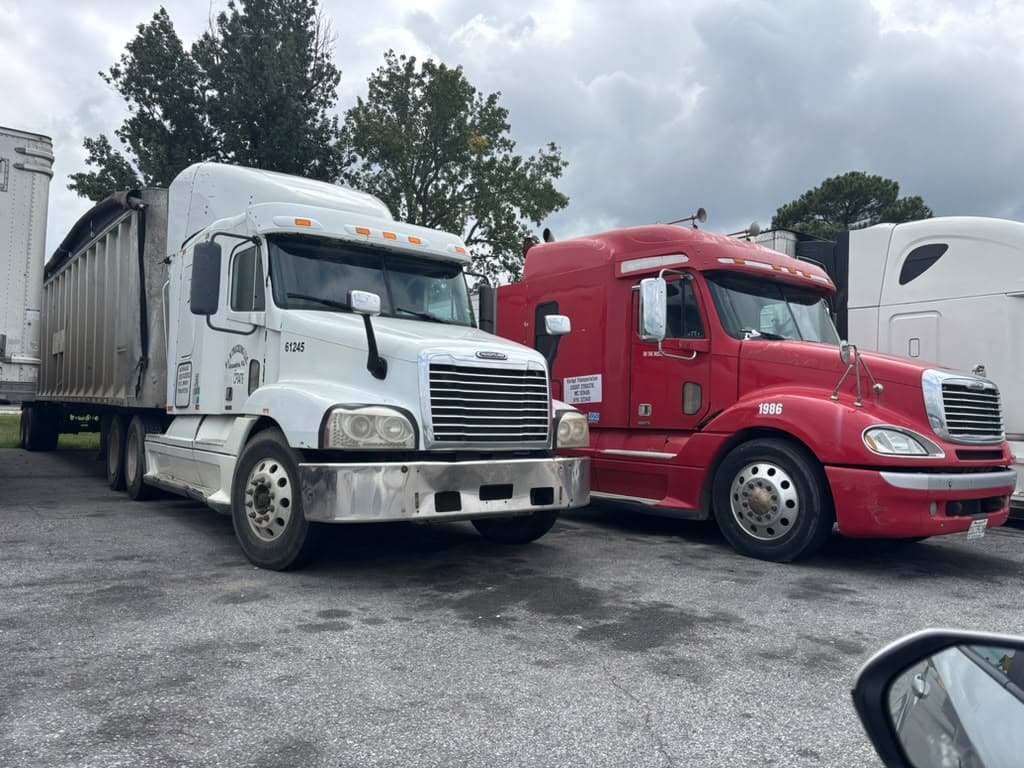
Commercial motor vehicle fleet compliance: Class 8 highway tractors synchronize in-cab Electronic Logging Devices with engine ECMs for FMCSA Hours of Service tracking.
Quick Answer: What Is an Electronic Logging Device (ELD)?
An Electronic Logging Device (ELD)is commercial vehicle hardware that connects directly to the engine control module (ECM) to automatically record a commercial driver's driving hours and duty status under federal Hours of Service (HOS) rules. Regulated by the FMCSA under 49 CFR Part 395, ELDs capture engine power status, vehicle motion, miles driven, and geographic location to generate secure, tamper-resistant Records of Duty Status (RODS) during roadside safety inspections.
Managing fleet compliance? ELD rules govern driver hours, while vehicles at 55,000+ lbs must file IRS Form 2290 annually for valid registration tags.
What Is an Electronic Logging Device (ELD)?
In commercial trucking, an Electronic Logging Device (ELD)is dedicated electronic hardware designed to track and document a commercial motor vehicle (CMV) driver's working hours. Prior to federal electronic logging rules, commercial drivers recorded their driving times, rest breaks, and off-duty periods manually on paper log sheets. Paper logbooks were frequently prone to clerical errors, difficult to verify during roadside safety inspections, and susceptible to falsification.
An ELD changes this dynamic by communicating directly with the commercial vehicle's internal engine control module (ECM). By synchronizing with the engine, the device automatically records whenever the vehicle is in motion, eliminating the guesswork surrounding driving hours.
Direct integration with the engine diagnostic port (J1939 or OBD-II) measures active engine operation, speed, and odometer distance.
A screen or paired mobile display allows the driver to log in, select duty statuses, complete vehicle inspections, and certify daily logs.
Motor carriers review certified driver records, track unassigned driving events, and maintain a 6-month statutory archive for FMCSA audits.
What Does an ELD Do?
At its core, an ELD is a specialized tool for monitoring compliance with federal Hours of Service (HOS) safety regulations. The federal government establishes strict limits on how many consecutive hours commercial motor vehicle operators may drive before mandatory rest periods are required to prevent driver fatigue.
Mandatory ELD Functions
Federal technical standards mandate that every registered ELD perform the following baseline operational functions:
- Automatic Driving Time Detection:The device automatically switches the driver duty status to "Driving" once the commercial vehicle exceeds a threshold speed of 5 miles per hour.
- Four Standard Duty Statuses: Records transitions between Driving (D), On Duty Not Driving (ON),Off Duty (OFF), and Sleeper Berth (SB), as well as special categories like Personal Conveyance (PC) and Yard Moves (YM).
- Engine Synchronization & Data Capture: Records engine power status, vehicle motion status, total engine hours, cumulative miles traveled, and location coordinates at every duty change and once per hour while in motion.
- Tamper-Resistant Log History: Prevents unauthorized deletion or silent overwriting of recorded driving time. Any edits proposed by the motor carrier require explicit driver review and re-certification.
- Roadside Inspection Data Transfer: Generates standardized electronic log files transferred via encrypted web services, secure email, USB 2.0, or Bluetooth to safety officials during roadside Department of Transportation (DOT) inspections.
Optional Telematics & Fleet Features
It is critical to distinguish between legally required ELD functions and optional commercial fleet-management features offered by vendors. While many platforms package these into a single dashboard, they are not part of the federal ELD mandate:
- Real-time GPS dispatch mapping and customer ETAs
- Automated jurisdictional mileage tracking for IFTA fuel taxes
- Electronic Driver Vehicle Inspection Reports (e-DVIR)
- Engine fault code diagnostics and maintenance scheduling
- Forward-facing and dual-facing AI dash cameras
- Automated 5 mph driving threshold detection
- Engine power on/off tracking and hourly position recording
- Standardized eRODS inspection data transfer protocols
- Driver daily log certification and dispute logging
- Engine diagnostic malfunction monitoring and indicator lamps
Federal ELD Requirements
The statutory foundation for electronic logging in the United States originates from the Moving Ahead for Progress in the 21st Century Act (MAP-21), enacted by Congress in 2012. The Federal Motor Carrier Safety Administration (FMCSA) subsequently published the formal ELD Final Rule under 49 CFR Part 395 Subpart B.
The mandate applies to the vast majority of commercial motor vehicle drivers operating in interstate commerce who are required to maintain paper Records of Duty Status under federal HOS rules (49 CFR § 395.8).
Federal ELD Exemptions and Exceptions
Not every commercial truck or driver is legally mandated to run an ELD. The FMCSA establishes specific statutory exceptions. If an operation qualifies for an exception, the driver may typically continue utilizing traditional paper log sheets or timecards:
- 1. Pre-2000 Engines:Vehicles equipped with engines manufactured before model year 2000 (determined strictly by the engine serial number and block casting year, regardless of the vehicle chassis model year). Because older mechanical engines lack electronic control modules (ECMs), they are exempt from ELD installation.
- 2. Short-Haul Operations:Drivers who operate within a 150 air-mile radius of their normal work reporting location, return to that same terminal within 14 consecutive hours, and do not exceed 11 hours of driving time (49 CFR § 395.1(e)(1)).
- 3. The 8-Day / 30-Day Rule:Drivers who are not required to maintain paper Records of Duty Status (RODS) for more than 8 days in any rolling 30-consecutive-day period. This provides flexibility for intermittent regional or occasional relief drivers.
- 4. Driveaway-Towaway Transports:Operations where the commercial motor vehicle being driven is the actual commercial commodity being delivered, or where the vehicle being transported is an empty or unladen motor home or recreational trailer.
*Always verify specific regulatory nuances directly with the FMCSA. State intrastate rules may adopt different exemption criteria for local agriculture, utility, or construction vehicles.
Trucking Compliance Chain
Connecting Driver Logs with Fleet Operating Authority
ELD logging is only one segment of your commercial compliance obligations. From vehicle registration and IRP plates to annual Heavy Vehicle Use Tax (HVUT), maintaining legal authority requires harmonized compliance records across both state and federal agencies.
Types of ELDs
While all certified ELDs must fulfill the same technical data specifications established by the FMCSA, the hardware and software architectures vary considerably. Motor carriers can choose between streamlined plug-and-play adapters, driver-owned mobile devices, hardwired dedicated units, or full-scale enterprise fleet telematics platforms.
1. Plug-and-Play ELDs
A compact hardware dongle plugs directly into the commercial vehicle diagnostic port underneath the dashboard (standard 9-pin J1939, 6-pin J1708, or OBD-II). Installation takes minutes and requires zero professional wiring. Popular among single-truck owner-operators and small carriers due to minimal upfront costs.
2. Bring Your Own Device (BYOD) ELDs
In a BYOD configuration, the motor carrier installs a small vehicle gateway, while the driver downloads the vendor certified ELD software application onto their personal or company-issued smartphone or tablet (iOS or Android). Communication occurs via secure Bluetooth. This reduces hardware investment but requires ensuring drivers maintain charged, compatible mobile devices.
3. Dedicated In-Cab Hardware
A standalone, ruggedized tablet or display that is permanently hardwired and mounted to the truck dashboard. The screen remains inside the cab 24/7 and cannot be detached or used for personal browsing. Common in enterprise fleets, slip-seat operations, and extreme-duty industrial environments where hardware durability and corporate control are paramount.
4. Mobile-App-Based ELD Systems
Systems where the primary user interface is delivered via mobile software. Critical compliance distinction: a standalone mobile application running on a smartphone is never a legal ELD by itself. Under federal law, the app must maintain continuous, automated data communication with an ECM-connected vehicle transmitter.
5. Telematics-Based ELD Systems
Mid-tier platforms that bundle regulatory HOS compliance with broader vehicle performance tracking. In addition to duty status, telematics gateways capture live GPS coordinates, harsh braking incidents, vehicle speed, idling metrics, and engine diagnostic trouble codes (DTCs).
6. Integrated Fleet Management Platforms
Enterprise technology ecosystems designed for medium-to-large motor carriers. These platforms integrate electronic logging with smart AI dashcams, electronic dispatch, route optimization, trailer temperature tracking, automated IFTA distance calculation, and payroll workflows.
Comparison: Major Types of ELDs
| Type of ELD | Typical Setup | Common Users | Main Advantages | Considerations |
|---|---|---|---|---|
| Plug-and-Play ELD | Plugs directly into 9-pin, 6-pin, or OBD-II diagnostic port; pairs wirelessly with mobile phone or tablet. | Owner-operators, independent drivers, small fleets (1–10 trucks). | Rapid self-installation, minimal hardware costs, no wiring required. | Relies on driver mobile device battery and Bluetooth connection stability. |
| BYOD (Bring Your Own Device) | ECM hardware gateway installed in cab; driver downloads certified mobile software onto personal or company phone/tablet. | Growing commercial fleets, owner-operators seeking lower initial capital expense. | Lower upfront hardware expenditure; familiar touchscreen interface for drivers. | Requires compatible iOS or Android operating systems; potential data plan usage. |
| Dedicated In-Cab Hardware | Permanently mounted, hardwired ruggedized touchscreen tablet integrated into the dashboard. | Medium to enterprise motor carriers, severe-duty vocations, slip-seat operations. | Tamper-resistant, extreme durability, dedicated cellular connectivity, driver cannot take device away. | Higher upfront hardware cost; professional installation often required. |
| Mobile-App-Based System | Driver conducts daily logging, certifications, and DVIRs via mobile software connected to engine transmitter. | Fleets with flexible driver assignments and frequent mobile device upgrades. | Frequent over-the-air feature updates, digital signature collection, intuitive workflows. | Must never be operated as a standalone app without verified ECM synchronization. |
| Telematics-Based ELD | Advanced vehicle gateway tracking engine diagnostics, fuel consumption, speed, and real-time GPS coordinates. | Regional freight carriers, refrigerated haulers, logistics compliance teams. | Comprehensive engine fault code diagnostics, idling tracking, geofencing, and automated IFTA records. | Requires monthly subscription tier; more complex initial administrative configuration. |
| Integrated Fleet Platform | Enterprise hardware ecosystem linking ELD, AI dash cameras, trailer tracking, and dispatch software. | Enterprise fleets (50+ power units), multi-terminal transport organizations. | Unified visibility across safety, dispatch, routing, maintenance, driver coaching, and compliance. | Multi-year enterprise service contracts and higher recurring platform fees. |
Major ELD Providers and Manufacturers
The commercial ELD market includes established telematics corporations, safety compliance firms, and modern fleet technology providers. Below is an informational overview of recognized providers currently offering self-certified ELD hardware and software for U.S. carriers:
| Provider | General Platform Type | Common Use Case | Official Site |
|---|---|---|---|
| Samsara | Integrated Enterprise Telematics & Cloud IoT | Mid-to-large fleets requiring unified ELD, AI safety cameras, GPS tracking, and automated maintenance workflows. | Visit Site |
| Motive (formerly KeepTruckin) | BYOD & Integrated Cellular Gateway Platform | Owner-operators and fleets of all sizes seeking an intuitive mobile interface, smart dashcams, and spend management. | Visit Site |
| Geotab | Open-Telematics Platform & Engine Diagnostic Hub | Fleets requiring deep vehicular engine diagnostics, custom third-party software integrations, and robust API access. | Visit Site |
| Verizon Connect | Enterprise GPS & Mobile Workforce Platform | Commercial carriers looking for advanced navigation, vehicle tracking, driver safety scoring, and commercial dispatching. | Visit Site |
| J. J. Keller | Compliance-Specialized Hardware & Managed Services | Carriers seeking specialized regulatory compliance oversight, outsourced HOS auditing, and durable in-cab devices. | Visit Site |
| EROAD | Precision Hardware & Road Tax Reporting System | Heavy transport fleets prioritizing high-accuracy GPS distance capture for weight-mile taxes, IFTA, and severe-duty durability. | Visit Site |
| HOS247 | Flexible No-Contract BYOD ELD System | Owner-operators and small-to-midsize fleets seeking straightforward HOS compliance with month-to-month subscription flexibility. | Visit Site |
| BigRoad / Fleet Complete | Driver-Friendly BYOD Hardware & Telematics | Independent drivers wanting a user-friendly mobile logbook with optional DashLink plug-and-play ECM hardware. | Visit Site |
| Azuga | GPS Telematics with Safety Gamification | Light-to-medium commercial fleets combining plug-and-play ELD logging with driver safety rewards and fuel card integration. | Visit Site |
| Linxup | Cost-Effective GPS Tracking & Basic ELD | Small business commercial fleets needing simple, budget-conscious HOS compliance alongside basic asset tracking. | Visit Site |
| Trimble Transportation | Enterprise Heavy-Duty Fleet Architecture | Large long-haul motor carriers requiring integrated transportation management systems (TMS), routing, and ruggedized hardware. | Visit Site |
| Omnitracs | Commercial Vehicle Telematics & Fleet Pioneer | Long-standing corporate transport operations utilizing comprehensive enterprise fleet routing, dispatch, and compliance. | Visit Site |
*Note: This provider directory is provided strictly for educational reference and is non-exhaustive. Consulics maintains no commercial or affiliate relationships with any listed vendor.
How to Verify Whether an ELD Is Registered with the FMCSA
Under federal law, the Federal Motor Carrier Safety Administration (FMCSA) does not pre-approve or test ELD devices prior to commercial sale. Instead, device manufacturers conduct internal testing and self-certify that their specific models comply with the functional technical specifications published in 49 CFR Part 395 Appendix A.
Because registration relies on vendor self-certification, the FMCSA actively monitors roadside data transmissions. If a device consistently fails electronic data transfer during safety inspections, the agency will formally issue a Revocation Notice, rendering that specific hardware illegal for commercial use after a 60-day replacement grace period.
Step-by-Step Verification Protocol for Motor Carriers:
- Obtain Exact Device Model & Software Version: Do not simply rely on the brand name. Obtain the specific hardware model number and firmware software version from the vendor.
- Search the Official FMCSA Registered ELD List: Navigate to the official FMCSA database at eld.fmcsa.dot.gov/List and confirm the exact model appears on the active list.
- Check the FMCSA Revoked ELDs List: Confirm that the device has not been placed on the official Revocation List at eld.fmcsa.dot.gov/List/Revoked.
- Maintain In-Cab FMCSA Instructions: Ensure your driver carries the mandatory in-cab compliance card detailing how to transfer logs during roadside inspection and an instruction sheet for handling ELD malfunctions.
How to Choose the Right ELD
Selecting an ELD platform is a major operational decision for any commercial motor carrier. A poorly matched system can lead to driver frustration, roadside inspection delays, and unexpected recurring expenses. Consider these practical evaluation criteria:
Confirm which diagnostic harness connector your commercial vehicle requires (J1939 9-pin black or green, J1708 6-pin, or light-duty OBD-II).
Evaluate how easily drivers can generate an inspection transmission (web services or email transfer) without accidentally displaying private records.
Calculate upfront hardware costs, professional installation fees, monthly SaaS licensing per truck, and multi-year contract termination clauses.
Verify if customer service technicians are reachable by phone 24/7. ELD hardware or software glitches that occur at roadside scales require instant resolution.
If operating interstate, confirm whether the system automatically tallies jurisdiction miles to eliminate manual logbook calculation at quarterly IFTA deadlines.
Ensure the software allows drivers to submit pre-trip and post-trip Driver Vehicle Inspection Reports electronically with photo attachments.
File your Form 2290
Calculate Your Vehicle Weight & Tax Obligations
While your ELD monitors Hours of Service, your commercial trucks may also owe the federal Heavy Vehicle Use Tax (HVUT). Use our free calculator to determine your exact Form 2290 tax rate.
ELD vs. Other Trucking Compliance Requirements
One of the most common points of confusion for new motor carriers and owner-operators is understanding how various regulatory requirements interact. Compliance in commercial transportation is multi-layered: maintaining an ELD does not relieve you of state registration or federal tax liabilities.
Below is a side-by-side comparison outlining where an ELD fits in relation to IRS Form 2290, the International Fuel Tax Agreement (IFTA), and the International Registration Plan (IRP):
| Requirement | Primary Purpose | Governing Agency | Filing Frequency | Proof of Compliance |
|---|---|---|---|---|
| ELD (Electronic Logging Device) | Hours of Service (HOS) & driver duty-status safety enforcement. | FMCSA / U.S. DOT | Continuous in-cab recording | Electronic Record of Duty Status (eRODS) transferred during roadside inspection. |
| IRS Form 2290 (HVUT) | Federal excise tax funding highway construction for vehicles 55,000+ lbs. | Internal Revenue Service (IRS) | Annual (due August 31 or month after first use) | IRS Watermarked Schedule 1 |
| IFTA (Fuel Tax) | Apportions state fuel taxes based on actual distance traveled per jurisdiction. | Base State Department of Revenue | Quarterly (Apr 30, Jul 31, Oct 31, Jan 31) | Valid IFTA license and annual exterior cab decals. |
| IRP (Apportioned Plates) | Reciprocal interstate commercial vehicle license plate registration. | Base State DMV / Motor Carrier Bureau | Annual renewal | Apportioned license plate and official paper or digital cab card. |
Notice the interconnected relationship: your state DMV will not issue or renew your IRP apportioned license plates without official proof of your IRS Form 2290 payment (the stamped Schedule 1). Similarly, while an ELD does not pay fuel taxes, its GPS odometer logs provide the primary distance verification records required during state IFTA and IRP audits.
Frequently Asked Questions About ELDs
What is an Electronic Logging Device (ELD)?
An Electronic Logging Device (ELD) is certified in-cab hardware that synchronizes directly with a commercial vehicle engine control module (ECM) to automatically record driving time, engine hours, vehicle movement, and driver Hours of Service (HOS) duty status.
Who is required to use an ELD under federal law?
Under FMCSA regulations (49 CFR Part 395), most motor carriers and commercial drivers operating in interstate commerce who are required to maintain Records of Duty Status (RODS) for more than 8 days within any rolling 30-day period must use a registered, self-certified ELD.
Are all commercial motor vehicles required to have an ELD?
No. The FMCSA provides specific exceptions, including commercial vehicles with engines manufactured prior to model year 2000, drivers operating under the 150 air-mile short-haul exemption who return within 14 hours, driveaway-towaway operations, and drivers using paper logs for 8 days or fewer in any 30-day span.
Can I use a smartphone or tablet alone as an ELD?
A smartphone or tablet alone is not an ELD. Under Bring Your Own Device (BYOD) systems, a phone or tablet can serve as the driver display interface, but it must be wirelessly paired (via Bluetooth or USB) to a certified hardware gateway connected directly to the vehicle engine ECM.
How do I check whether an ELD device is officially registered with the FMCSA?
You can verify whether a specific ELD model is currently registered by searching the official FMCSA Registered ELD database at eld.fmcsa.dot.gov/List. You should also check the FMCSA Revoked ELDs list to ensure your model has not been removed due to technical deficiencies.
Is an ELD the same as a GPS fleet tracking system?
No. While many modern ELD platforms bundle GPS telematics, an ELD is a federally regulated statutory compliance instrument designed specifically to record driver duty status and prevent Hours of Service violations. GPS tracking is an operational tool for location and dispatch monitoring.
Does having an ELD fulfill IRS Form 2290 or HVUT requirements?
No. ELDs record Hours of Service and driver duty status for the FMCSA. Heavy Vehicle Use Tax (Form 2290) is a separate federal excise tax administered by the IRS on commercial vehicles weighing 55,000 pounds or more. An ELD does not calculate, file, or pay Form 2290.
Can an ELD help with IFTA fuel tax reporting?
Many telematics-based ELD platforms automatically log jurisdictional miles traveled across state lines using integrated GPS. While this mileage data greatly simplifies calculating quarterly IFTA returns, motor carriers must still prepare and submit their own official IFTA tax returns to their base state.
Related Trucking Compliance Resources on Consulics:
- E-File IRS Form 2290 Online (Fast Schedule 1)
- Form 2290 Filing Deadlines & Due Date Checker
- HVUT Compliance Guide for Fleet Managers
- The Commercial Trucking Compliance Chain
- For-Hire Commercial Tags & DMV Rules
- IFTA Fuel Tax Guide & Reporting Requirements
- Free Commercial Vehicle VIN Checker
- Historical FMCSA ELD Mandate Overview
Keep Your Trucks Rolling Legally with Consulics
While your ELD maintains driver duty compliance, Consulics ensures your federal Heavy Vehicle Use Tax is settled instantly. Receive your official IRS-watermarked Schedule 1 PDF in 5 minutes with free VIN corrections.
Ready to file your Form 2290?
Consulics is an IRS authorized e-file provider. Get your stamped Schedule 1 back in minutes, with free VIN corrections.