Trucking Compliance & Safety
Unladen Weight vs Taxable Gross Weight vs GVWR
Written by the Consulics HVUT Compliance Team · Reviewed against the IRS Instructions for Form 2290
Need your stamped Schedule 1 today? You can e-file Form 2290 with Consulics in minutes.
e-File Form 2290 NowQuick Answer
Unladen weight is the empty weight of a vehicle with no load. GVWR is the manufacturer's maximum safe loaded rating. Taxable gross weight, the number Form 2290 uses, is the truck's actual unloaded weight fully equipped, plus the unloaded weight of trailers customarily used, plus the maximum load customarily carried. Taxable gross weight sets your Heavy Vehicle Use Tax.
Weight sounds like it should be one simple number, but a truck actually has several, and they are not interchangeable. Mixing them up is one of the easiest ways to put the wrong figure on Form 2290. Here is the difference between unladen weight, GVWR, and the taxable gross weight the IRS actually wants.
What is unladen weight?
Unladen weight is the weight of the vehicle empty, with no cargo on board. It is the truck as it sits, fully equipped and ready to work, but carrying nothing. On its own, unladen weight is not the number Form 2290 uses, though it is a piece of the calculation.
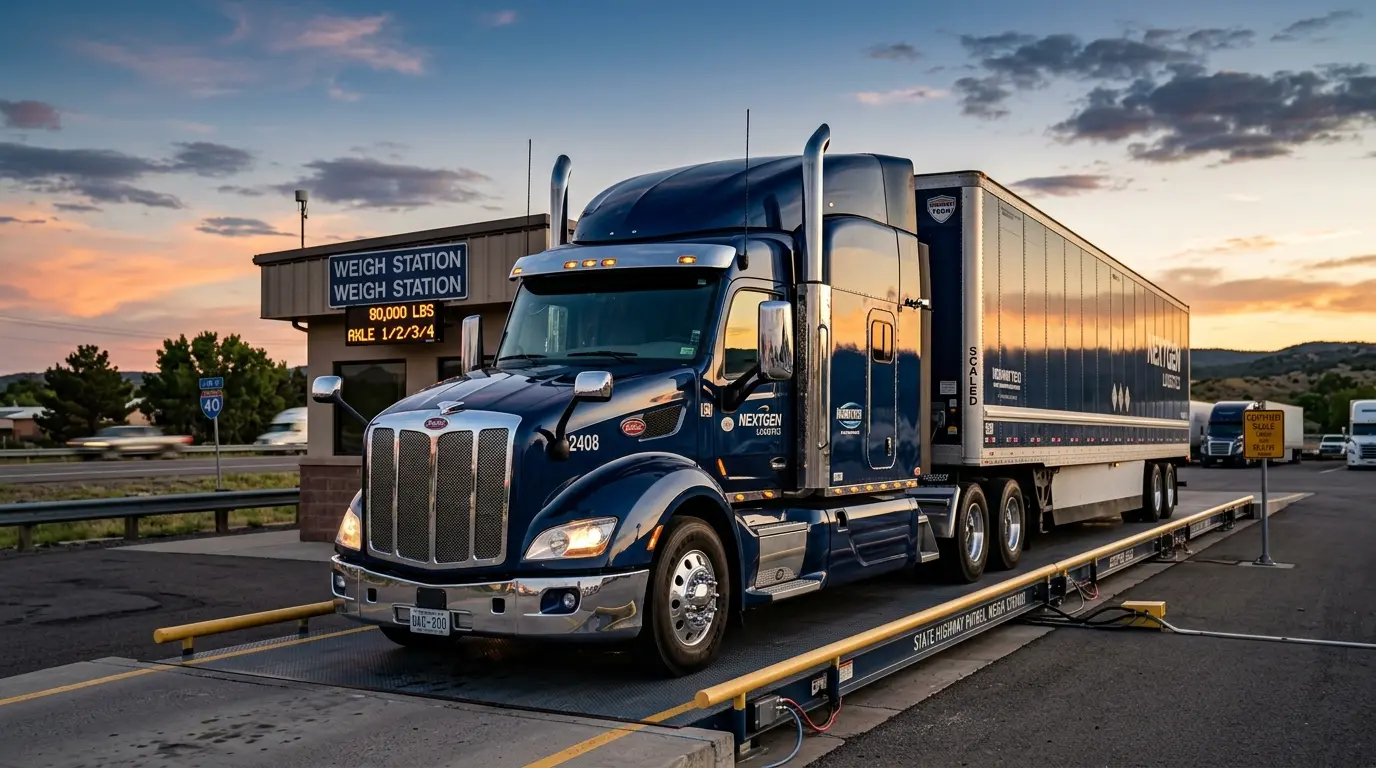
Class 8 commercial motor vehicle on a certified platform scale determining taxable gross weight for IRS Form 2290 compliance.
What is GVWR?
GVWR stands for Gross Vehicle Weight Rating. It is the maximum loaded weight the manufacturer has certified the vehicle to carry safely. It is a rating, a ceiling set at the factory, rather than a measure of how the truck is actually loaded and used. Because it is a maximum rating, GVWR is often not the same as the taxable gross weight you report.
What is taxable gross weight for Form 2290?
Taxable gross weight is the specific figure the Heavy Vehicle Use Tax is based on. It is the sum of three things: the actual unloaded weight of the truck fully equipped for service, the actual unloaded weight of any trailers or semitrailers customarily used with it, and the weight of the maximum load customarily carried on the truck and those trailers. That total is what puts your vehicle into an IRS weight category on Form 2290. If you are preparing to file, follow our step-by-step guide on how to file Form 2290 online to see how gross weights are entered in the e-file portal.
Not sure of your weight category?
Consulics figures the right category from your taxable gross weight and files it. Stamped Schedule 1 in minutes.
e-File Form 2290 NowHow do you calculate taxable gross weight?
Add the three pieces together. Start with the empty weight of the truck itself, add the empty weight of the trailers you normally pull with it, and then add the heaviest load you normally carry on that combination. The result is your taxable gross weight. If it comes to 55,000 pounds or more, the vehicle is taxable under federal HVUT rules. You can use our free Form 2290 weight category finder to instantly calculate your bracket, or file Form 2290 online to submit directly to the IRS.
Which weight determines your Form 2290 tax?
Taxable gross weight is the one that sets your tax. Not the unladen weight, and not the GVWR. Two identical trucks can owe different amounts if they are customarily loaded differently, because the maximum load customarily carried is part of the taxable gross weight. Getting this figure right is what keeps your filing accurate and ensures your stamped Schedule 1 proof of payment is accepted without delays by your state DMV or IRP apportioned plate office.
IRS Authorized e-File Provider
File Form 2290 Online With Confidence
Join thousands of owner-operators, fleets, and tax professionals who trust Consulics for fast, secure Heavy Vehicle Use Tax filing. Receive your official IRS-stamped Schedule 1 in minutes.
Flat $49.50 fee for 1–24 vehicles · Free instant VIN corrections · 100% Free re-filing if rejected
Related Compliance Guides
What Is an ELD? FMCSA Requirements and How to Choose a Provider
Official FMCSA Electronic Logging Device (ELD) mandate guide. Learn 49 CFR Part 395 rules, self-certified device lists, pre-2000 exemptions & compliance.
Trucking Insurance Requirements for Owners, Operators, and Fleets
Why trucks need insurance, the main coverage types, the FMCSA legal minimums, and what you must carry before the road and before a load. No insurer named.
CDL Medical Certification Requirements for Commercial Drivers
Why CDL drivers need a DOT medical certificate, what the exam covers, who performs it, the FMCSA rules, renewal periods, and what happens if it lapses.
Driver Qualification File Requirements for Trucking Companies
What a driver qualification file must contain under FMCSA rules, how hiring and onboarding fit in, the annual review, and how long a carrier keeps it.