Commercial Equipment & Heavy Vehicle Technical Guide
What Is a Class 8 Tractor? Types, Specifications, Models and Buying Factors
Technical analysis for motor carriers, owner-operators, corporate fleet managers, and commercial tax professionals · Equipment Reference
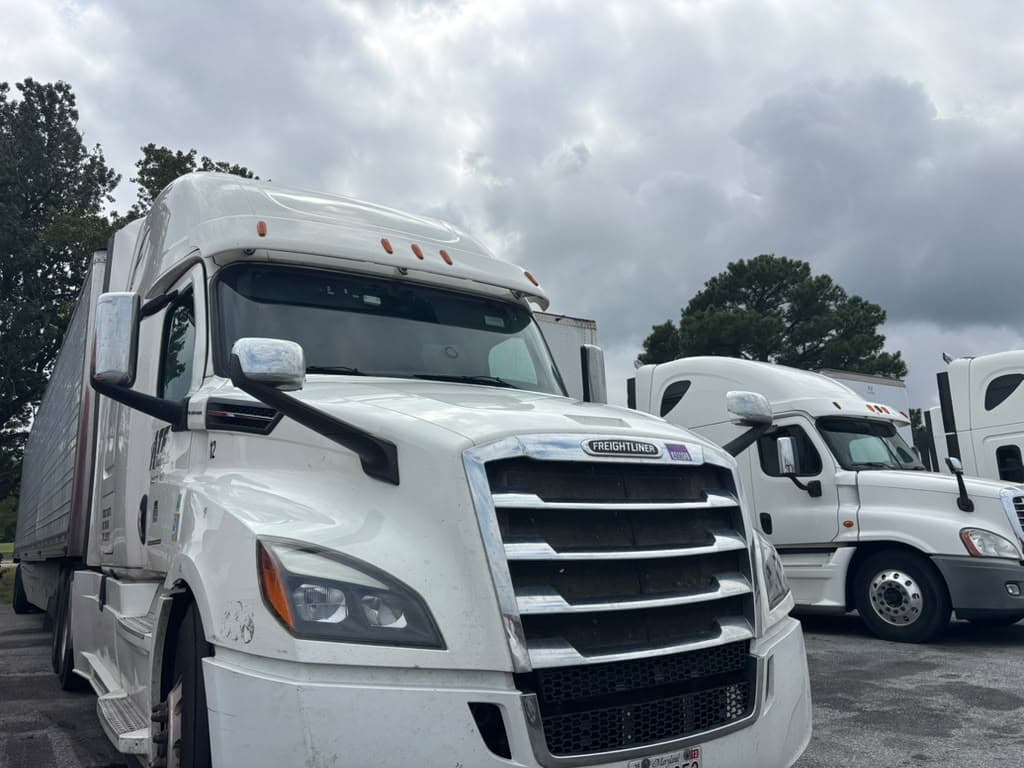
Class 8 highway tractor: Aerodynamic Freightliner Cascadia configuration equipped with a high-roof sleeper and fifth-wheel coupling.
Quick Answer: What Is a Class 8 Highway Tractor?
A Class 8 highway tractor (commonly referred to as a semi-truck or road tractor) is a heavy-duty commercial motor vehicle with a Gross Vehicle Weight Rating (GVWR) exceeding 33,000 pounds, engineered with a fifth wheel coupling to pull trailing freight units. Operating under a legal Gross Combination Weight Rating (GCWR) of 80,000 pounds (or higher under specialized heavy-haul permits), Class 8 tractors are powered by 11-liter to 16-liter heavy-duty diesel or alternative engines and almost universally fall into IRS Form 2290 Category V for annual Heavy Vehicle Use Tax.
Operating a Class 8 highway tractor? Any tractor pulling loaded freight combinations over 54,999 lbs must file IRS Form 2290 annually to receive a watermarked Schedule 1 for license plate registration.
What Is a Highway Truck Tractor?
In commercial transportation and regulatory law, a highway truck tractor is fundamentally distinct from a standard straight truck. While a straight truck (such as a box truck, dump truck, or concrete mixer) carries its cargo directly on a single rigid frame rails assembly, a truck tractor carries no cargo payload directly on its own chassis.
Instead, a tractor is fitted with a heavy-duty oscillating steel coupling device known as a fifth wheelmounted over its rear drive axles. The fifth wheel locks onto the kingpin of a semitrailer, allowing the tractor to pull the trailer while physically supporting a substantial portion of the trailer's forward weight. This articulated pivot connection provides superior maneuverability, enables interchangeable fleet logistics (one tractor can swap between dry vans, reefers, flatbeds, and tankers), and allows maximum weight distribution across multiple axle groups.
Class 8 heavy-duty vehicle with a solo GVWR over 33,000 lbs, legally operating up to 80,000 lbs GCWR on 5 standard highway axles.
Pivoting fifth wheel mechanism absorbs rotational, pitch, and roll forces between tractor and semitrailer during highway transit.
Assigned the commercial power-unit registration, carrying the IRP apportioned cab card, USDOT safety marking, and Form 2290 tax liability.
Tractor Cab Styles & Configurations
The physical architecture of a Class 8 tractor dictates its driver ergonomics, tare weight, fuel efficiency, and route suitability. The two most significant design choices are cab size (Day Cab vs. Sleeper) and engine placement (Conventional vs. Cab-Over).
1. Day Cab vs. Sleeper Cab
A Day Cab features a compact cabin with no sleeping berth behind the seats. The rear cab wall sits directly behind the driver, resulting in a shorter wheelbase (typically 160 to 200 inches) and a significantly lighter tare weight (approx. 14,000 to 16,000 lbs).
- Primary Roles: Regional hauling, port container drayage, local LTL delivery, agriculture, and construction.
- Key Advantage: 1,500 to 3,000 lbs lighter than sleeper units, maximizing legal freight payload capacity.
- Maneuverability: Shorter turning radius allows easy navigation of tight urban alleys and congested distribution centers.
- Cost: $15,000 to $30,000 lower initial acquisition cost compared to full-size sleeper cabs.
A Sleeper Cab integrates a sleeper compartment behind the cockpit ranging from 48-inch regional flat-tops to 72–86-inch luxury high-roof aerocabs equipped with full-size mattresses, refrigerators, microwave cabinets, television mounts, and auxiliary power units (APUs).
- Primary Roles: Long-haul over-the-road (OTR) cross-country freight, team driver logistics, irregular-route freight.
- HOS Compliance: Enables legal compliance with FMCSA 10-hour rest break and sleeper berth split-rest rules (49 CFR § 395.1(g)).
- Tare Weight: Heavier chassis (approx. 17,500 to 21,000 lbs) and longer wheelbases (220 to 265+ inches).
- Driver Retention: Spacious premium interiors with integrated climate control help carriers recruit and retain top OTR talent.
2. Conventional Cab vs. Cab-Over-Engine (COE)
Historically, commercial tractors in the United States were divided between Conventional models (where the engine sits forward under a hood in front of the driver) and Cab-Over-Engine (COE) models (where the cab sits directly over the front axle and engine).
- Conventional Dominance: When federal length regulations shifted from measuring overall vehicle bumper-to-bumper length to measuring trailer length alone (the Surface Transportation Assistance Act of 1982), conventional tractors rapidly captured 99%+ of the North American market. Conventionals offer superior aerodynamic efficiency, smoother ride quality due to longer wheelbases, easier engine access for maintenance without tilting the cab, and enhanced passive safety by placing several feet of engine block in front of the driver.
- Cab-Over-Engine (COE): While virtually phased out of North American linehaul operations, modern cab-overs (and specialty imports) are still found in congested urban waste operations, auto transport stinger units, and European transport where strict overall vehicle length limits remain in effect.
Drivetrain & Axle Configurations (4x2, 6x4, 6x2 & Multi-Axle)
A tractor's axle configuration determines its legal weight-bearing limits under federal bridge formula statutes, its tractive effort on mountain grades, and its baseline fuel consumption. In commercial naming conventions, the first digit represents total wheel ends (or axle positions), and the second digit represents powered driven positions.
| Configuration | Axle Layout | Legal Axle Limit | Typical Applications | Pros & Cons |
|---|---|---|---|---|
| 4x2 (Single Rear Drive Axle) | 2 Axles (1 Steer, 1 Drive) | Single drive axle legal limit: 20,000 lbs | LTL freight carriers, city pickup and delivery, parcel carriers, beverage distribution. | Pros: Lowest purchase cost, lowest tire replacement expenses, excellent turning radius, highest fuel economy.Cons: Limited traction in snow/ice, cannot legally handle 34,000 lb tandem highway weights. |
| 6x4 (Tandem Rear Drive Axles) | 3 Axles (1 Steer, 2 Driven Axles) | Tandem drive legal limit: 34,000 lbs | Over-the-road (OTR) dry van, refrigerated freight, flatbed, tank transport, general freight. | Pros: Maximum highway stability, full 34,000 lb tandem capacity, superior all-weather traction across mountain grades.Cons: Higher tare weight (~1,000 lbs heavier than 6x2), 8 drive tires to maintain, slightly higher drivetrain parasitic drag. |
| 6x2 (Single Drive + Non-Driven Tag/Pusher) | 3 Axles (1 Steer, 1 Drive, 1 Dead Axle) | Tandem weight rated: 34,000 lbs | Dedicated flat-terrain highway fleets, dry van haulers prioritizing fuel efficiency. | Pros: Saves 300–500 lbs tare weight, eliminates rear differential, delivers 2% to 3% fuel savings.Cons: Susceptible to wheel spin in wet or icy yards, uneven tire wear if lift axle logic is improperly calibrated. |
| 8x4 / 8x6 (Heavy-Haul Multi-Axle) | 4+ Axles (1 Steer, 2–3 Drives, 1–2 Lift Axles) | Governed by state bridge formula tables (up to 42,000+ lbs on tridem) | Specialized lowboy equipment transport, oversized modular loads, oilfield rigging, logging. | Pros: Distributes massive payloads legally without exceeding per-axle pavement limits, high chassis durability.Cons: Heavy tare weight (22,000+ lbs), expensive tire arrays, complex hydraulic lift suspensions, higher road taxes. |
IRS Weight Category Determination
Calculate Your Combination Weight for Form 2290
Under IRS regulations, a highway tractor must be registered based on its combined gross weight—including the tractor, the heaviest trailer customarily towed, and the maximum cargo payload. Use our free interactive tools to confirm your taxable gross weight category.
Major Class 8 Tractor Manufacturers & Current Models
The North American Class 8 heavy-duty tractor market is anchored by seven major commercial truck brands operating under four global parent manufacturing groups: Daimler Truck North America (Freightliner, Western Star), PACCAR (Peterbilt, Kenworth),Volvo Group (Volvo Trucks, Mack Trucks), and TRATON Group (International).
The table below provides a comprehensive comparison of each major manufacturer, their representative current flagship highway aerodynamic models, vocational severe-duty platforms, engine choices, power ratings, and automated manual transmissions:
| Manufacturer | Flagship Aero Model | Vocational / Heavy Model | Standard Engines | Output (HP / Torque) | Transmissions | Official Website |
|---|---|---|---|---|---|---|
| Freightliner (Daimler Truck)~37% (North American Class 8 Market Leader) | Cascadia | 114SD Plus / 122SD | Detroit DD13 (12.8L), DD15 (14.8L), DD16 (15.6L), Cummins X15 | 370 – 600 hp1,250 – 2,050 lb-ft | Detroit DT12 AMT, Eaton Fuller Manual, Allison Automatic | Official Site |
| Peterbilt (PACCAR)~15% (Premium Long-Haul & Vocational) | Model 579 | Model 589 (Heritage Conventional), Model 567 | PACCAR MX-13 (12.9L), PACCAR MX-11 (10.8L), Cummins X15, Cummins X15N (Natural Gas) | 355 – 605 hp1,250 – 2,050 lb-ft | PACCAR TX-12 / TX-18 Automated, Eaton Manual, Allison | Official Site |
| Kenworth (PACCAR)~14% (The Driver’s Truck / High Resale) | T680 | W990 / W900L, T880 | PACCAR MX-13, PACCAR MX-11, Cummins X15, Cummins X15N | 355 – 605 hp1,250 – 2,050 lb-ft | PACCAR Powertrain TX-12 / TX-18, Eaton Manual, Allison | Official Site |
| Volvo Trucks (Volvo Group)~10% (Safety & Aerodynamic Innovation) | All-New VNL Series (VNL 300, 660, 860) | VNX (Extreme Heavy Haul up to 225,000 lbs GCWR), VHD | Volvo D13 (12.8L), Volvo D13 with Turbo Compound (I-Torque), Cummins X15 (VNX) | 405 – 605 hp1,450 – 2,050 lb-ft | Volvo I-Shift 12-speed Automated, I-Shift with Crawler Gears | Official Site |
| Mack Trucks (Volvo Group)~7% (American Durability & Integrated Powertrain) | Anthem | Pinnacle (Axle-Forward), Granite | Mack MP8 (13.0L), Mack MP7 (11.0L), Cummins X15 | 325 – 505 hp1,260 – 1,860 lb-ft | Mack mDRIVE 12-speed / 13-speed / 14-speed AMT with Crawlers, Allison | Official Site |
| International (Navistar / TRATON)~12% (Fleet Value & Modular Powertrain) | LT Series | RH Series (Regional), HX Series (Heavy Haul) | International S13 Integrated (12.7L Scania-derived), Cummins X15 | 400 – 515 hp (S13) / up to 605 hp (Cummins)1,450 – 2,050 lb-ft | International T14 14-speed Dual-Clutch AMT, Eaton Manual | Official Site |
| Western Star (Daimler Truck)~3% (Tough Luxury & Severe Heavy Transport) | 57X | 49X, 47X | Detroit DD13, Detroit DD15, Detroit DD16 (15.6L), Cummins X15 | 370 – 600 hp1,250 – 2,050 lb-ft | Detroit DT12-V / DT12-VX Extreme Duty AMT, Eaton Manual, Allison | Official Site |
*Specifications represent manufacturer-published ranges for current model years. Ratings vary by specific displacement, calibration, axle ratio, and vocational rating. This directory is informational and does not constitute an endorsement of any manufacturer.
Powertrain Technologies: Diesel, Natural Gas, and Zero-Emission Electrification
Modern commercial tractors utilize highly optimized powertrains engineered to balance low-end pulling torque with strict EPA greenhouse gas (GHG Phase 2 and Phase 3) emissions standards.
Heavy-Duty Clean Diesel (11L to 16L Inline-6)
The undisputed workhorse of North American long-haul freight. Modern inline-6 engines feature common-rail high-pressure fuel injection (exceeding 35,000 PSI), variable geometry turbochargers (VGT), and complex aftertreatment canisters combining Diesel Oxidation Catalysts (DOC), Diesel Particulate Filters (DPF), and Selective Catalytic Reduction (SCR) with Diesel Exhaust Fluid (DEF). Engines like the Detroit DD15, Cummins X15, PACCAR MX-13, and Volvo D13 deliver peak torque at remarkably low RPMs (900–1,100 RPM), allowing engines to cruise at lower speeds (downspeeding) for superior fuel economy (often achieving 7.5 to 9.0+ MPG under optimal highway loads).
Automated Manual Transmissions (AMTs)
While traditional 10-speed, 13-speed, and 18-speed manual transmissions dominated commercial trucking for decades, modern fleets now specify Automated Manual Transmissions (AMTs) on over 90% of new highway builds. AMTs like the Detroit DT12, Volvo I-Shift, PACCAR TX-12, and International T14 feature computer-controlled pneumatic clutch actuators. They eliminate driver clutch fatigue, optimize shift points via predictive GPS terrain mapping, and protect drivetrains from shock load damage.
Natural Gas & Renewable Natural Gas (CNG / RNG)
With the commercial release of the 15-liter Cummins X15N, natural gas has expanded from local refuse fleets into full-scale Class 8 long-haul linehaul. Delivering up to 500 hp and 1,850 lb-ft of torque, the X15N matches heavy diesel performance curves while operating on Compressed Natural Gas (CNG) or Renewable Natural Gas (RNG) with zero-to-negative lifecycle carbon intensity.
Battery-Electric Commercial Tractors (BEV)
Zero-emission commercial tractors—such as the Freightliner eCascadia, Volvo VNR Electric, and Peterbilt 579EV—are actively deployed in regional haul, intermodal port drayage, and dedicated distribution. Carrying battery capacities between 250 kWh and 565 kWh, these Class 8 tractors offer operating ranges of 150 to 250 miles per charge and instant low-end electric torque, supported by federal and state clean-air incentives.
File your Form 2290
Putting a New or Used Tractor on the Road?
Whenever you acquire a Class 8 highway tractor, you have 60 days to present an official IRS-watermarked Form 2290 Schedule 1 to your state DMV to secure permanent license plates and IRP cab cards. E-file with Consulics for instant Schedule 1 delivery.
Key Factors a Motor Carrier Must Consider Before Purchasing
Whether purchasing a single power unit as an independent owner-operator or acquiring 100 tractors for an enterprise carrier, evaluating equipment requires looking far beyond the initial sticker price. Consider these primary decision metrics:
Factor in upfront depreciation, fuel economy (a 1.0 MPG improvement across 100,000 annual miles saves $5,000 to $7,000 in diesel), preventive maintenance intervals, extended warranty premiums, and 5-year secondary resale value.
In bulk liquid, refrigerated, and flatbed transportation, every pound of tractor chassis weight directly subtracts from paying freight. Specifying aluminum crossmembers, super-single tires, and 13L rather than 15L engines can shed 1,000+ lbs of dead tare weight.
A stranded truck costs $1,000+ per day in lost revenue. Verify the manufacturer service network across your active freight lanes. Established brands like Freightliner and Peterbilt/Kenworth feature extensive 24/7 North American dealership networks.
With ongoing driver shortages, cab comfort matters. Quiet sound insulation, factory-installed auxiliary power units (APUs), ergonomic seating, and automated manual transmissions drastically reduce driver turnover and fatigue-related safety incidents.
Match your rear axle gear ratio to your operating profile. High-speed flat-terrain linehaul benefits from tall gears (e.g., 2.15 to 2.47) for engine downspeeding at 65 mph, whereas heavy-haul mountain freight demands deeper ratios (e.g., 3.42 to 4.10) for startability.
If operating in California or interstate lanes that enter the Western states, ensure the engine meets the California Air Resources Board (CARB) Clean Truck Check standards and Advanced Clean Fleets (ACF) purchase requirements.
Regulatory Compliance for Class 8 Tractors: Form 2290, IRP, and IFTA
Purchasing a Class 8 highway tractor is only the initial step. Before your power unit can legally haul commercial freight across state lines, motor carriers must coordinate several interlocking compliance requirements:
- IRS Form 2290 (HVUT): Because a Class 8 tractor pulling a loaded semitrailer exceeds 54,999 pounds, federal statute mandates an annual payment of the Heavy Vehicle Use Tax. For vehicles operating at 75,000 lbs and over, the federal tax is $550.00for a full tax year (July 1 to June 30). You receive an official IRS-watermarked Schedule 1 that proves payment.
- State DMV & IRP Apportioned Registration: Under 23 U.S.C. Section 141, every state DMV and International Registration Plan (IRP) office is legally prohibited from issuing or renewing apportioned license plates without verifying your official IRS-stamped Schedule 1.
- First Used Month (FUM) Proration: If you purchase a tractor and put it into service mid-year (such as November or March), you do not pay the full $550. The IRS prorates the tax based on the month of first use. You must file Form 2290 by the last day of the month following the month the vehicle was first operated.
- VIN Verification: During purchase, check the 17-character VIN on the physical truck chassis against the vehicle title and manufacturer certificate of origin. A single mistyped character will cause state DMV registration rejections. Use our free VIN checker or VIN decoder before submitting paperwork.
Frequently Asked Questions About Class 8 Tractors
What is the definition of a highway truck tractor?
A truck tractor is a Class 8 commercial motor vehicle designed with a fifth wheel hitch specifically to pull, haul, and support a portion of the weight of a semitrailer. Unlike a straight truck, a tractor carries no cargo payload directly on its own frame—its primary mechanical purpose is motive power and articulation.
What is the difference between GVWR and GCWR on a semi-truck?
Gross Vehicle Weight Rating (GVWR) is the maximum legal operating weight of the tractor unit alone (typically 35,000 to 54,000 lbs for tandem-drive highway tractors). Gross Combination Weight Rating (GCWR) is the total maximum permissible weight of the tractor, semitrailer, and cargo payload combined, which legally caps at 80,000 lbs on standard 5-axle highway combinations without specialized state oversize/overweight permits.
Do all Class 8 tractors owe IRS Form 2290 Heavy Vehicle Use Tax (HVUT)?
Yes, in virtually all commercial highway freight operations. Under 26 CFR § 41.4482(b)-1, the IRS calculates taxable gross weight by adding the empty tractor tare weight, the empty trailer tare weight, and the maximum load customarily hauled. Because Class 8 tractors customarily pull loaded semitrailers over 55,000 lbs, they almost universally fall into IRS Category V (75,000 lbs and over), incurring the maximum federal tax of $550 per year.
When should a fleet choose a day cab over a sleeper cab tractor?
A day cab is ideal for regional operations, port drayage, local pickup and delivery (P&D), and vocational hauling where drivers return to their home terminal daily. Day cabs save 1,500 to 3,000 lbs in tare weight, offer tighter turning radiuses, provide superior maneuverability in city traffic, and cost $15,000 to $30,000 less than comparable sleeper tractors.
What is the standard engine size and horsepower for a Class 8 highway tractor?
Most modern North American highway tractors are powered by 12.8-liter to 15.6-liter inline-6 turbodiesel engines delivering between 400 and 510 horsepower and 1,450 to 1,850 lb-ft of torque. Heavy-haul and severe-duty vocational tractors frequently spec up to 600 to 605 horsepower and 2,050 lb-ft of torque.
What is the difference between a 6x4 and a 6x2 axle configuration?
A 6x4 tractor has three axles with two driven tandem rear axles, providing superior all-weather traction on slippery highways and steep mountain grades. A 6x2 tractor also has three axles, but only one rear axle is driven while the other is a non-driven tag or pusher axle, reducing tare weight by 300 to 500 lbs and improving fuel economy by 2% to 3% through reduced mechanical parasitic drag.
Related Trucking Compliance & Equipment Resources on Consulics:
- E-File IRS Form 2290 Online (Fast Schedule 1)
- Form 2290 by Truck Type & Manufacturer Guide
- 2290 Heavy Highway Vehicle Tax Calculator
- Form 2290 Taxable Gross Weight Category Finder
- Form 2290 Deadline & Proration Schedule
- What Is an IRS Watermarked Schedule 1?
- NHTSA Commercial Vehicle VIN Decoder
- The Commercial Trucking Compliance Chain
Keep Your Class 8 Tractors Legally Plated
Whether you operate a single Freightliner Cascadia or manage a multi-state fleet of Peterbilt and Kenworth tractors, Consulics delivers your official IRS-watermarked Schedule 1 in 5 minutes with free VIN corrections and flat $49.50 pricing.