The Modern Commercial Driver Training Landscape: Understanding the Federal ELDT Mandate
On February 7, 2022, the Federal Motor Carrier Safety Administration (FMCSA) instituted the most comprehensive regulatory overhaul of commercial driver licensing in modern history: the Entry-Level Driver Training (ELDT) mandate, codified under Title 49 of the Code of Federal Regulations (49 CFR) Part 380, Subpart F.
Prior to ELDT, commercial driver training requirements varied drastically by state, with some jurisdictions allowing individuals to challenge the CDL exam after brief informal coaching. Under the federal ELDT regulations, any individual seeking to obtain a Class A or Class B Commercial Driver's License (CDL), upgrade an existing Class B to a Class A, or obtain an initial Hazardous Materials (H), Passenger (P), or School Bus (S) endorsement must first successfully complete a federally registered training curriculum delivered by an authorized entity listed on the FMCSA Training Provider Registry (TPR).
State Driver Licensing Agencies (SDLAs) are legally blocked from administering the commercial skills or knowledge examination until the candidate's electronic ELDT completion certification is digitally verified in the federal TPR database.
- Mandatory Two-Pillar Curriculum: Drivers must complete both Theory Instruction (classroom/online) and Behind-the-Wheel (BTW) Training (range and public road).
- No Minimum Hours Clock (Proficiency-Based): Federal ELDT does not mandate a minimum number of training hours; instead, students must demonstrate verified proficiency across all prescribed core competencies.
- 80% Minimum Theory Exam Benchmark: Candidates must achieve at least 80% on standardized written theory assessments administered by an authorized TPR provider.
- Training Provider Registry (TPR) Synchronization: Training institutions must electronically submit candidate completion records within two business days of training completion.
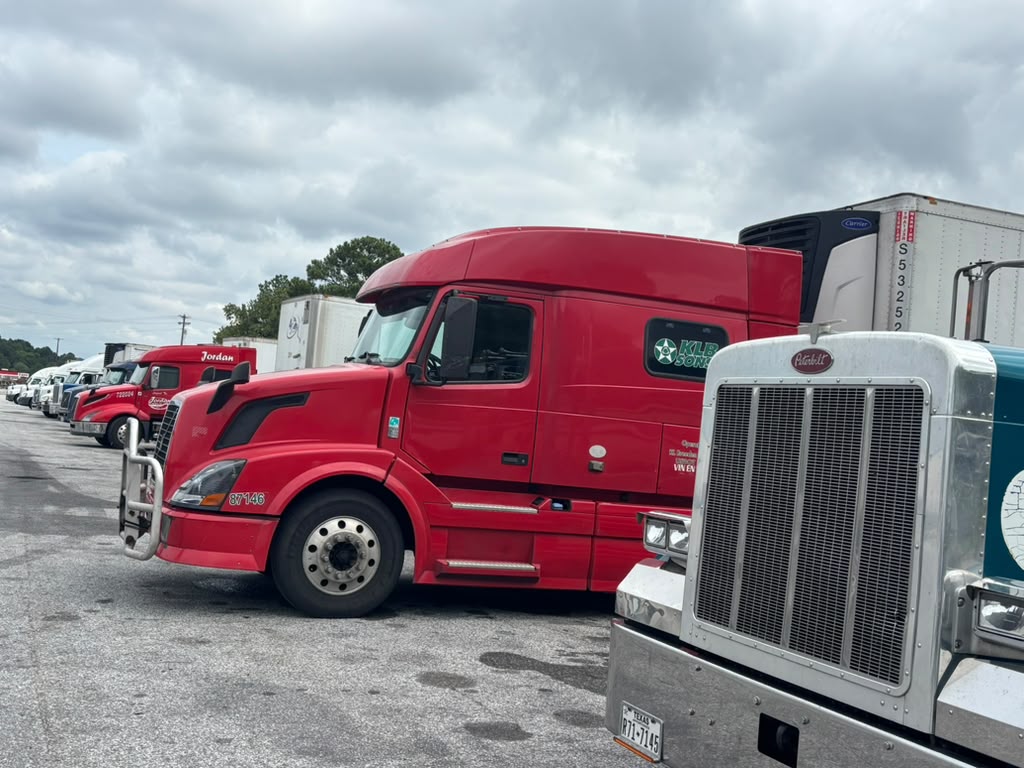
Figure 3.3: Modern Class 8 commercial tractor-trailers prepared for Entry-Level Driver Training (ELDT) Behind-the-Wheel (BTW) range backing and public road operational instruction.
Launch Your Trucking Operation Legally with Form HVUT 2290
Earning your CDL is step one; maintaining active motor carrier authority is step two. E-file Form HVUT 2290 with Consulics and secure your IRS stamped Schedule 1 proof in minutes.
e-File Form HVUT 2290 Now →The 30 Prescribed Theory Units: Core Competencies of Commercial Class A Training
The federal ELDT Class A theory curriculum establishes thirty mandatory learning units divided into five core sections. Candidates must cover all 30 topics before being certified to test.
| Curriculum Section | Units Covered | Key Subject Matter Topics | FMCSA Competency Standard |
|---|---|---|---|
| Section 1: Basic Operation | Units 1 through 10 | Control systems, vehicle communications, shifting, backing, coupling/uncoupling, visual search. | Student must describe proper 5th wheel jaw locking and mirror adjustment. |
| Section 2: Safe Operating Procedures | Units 11 through 16 | Visual search, speed management, space management, night driving, extreme weather, skid control. | Student must understand hydroplaning, stopping distances, and mountain descent. |
| Section 3: Advanced Systems | Units 17 through 20 | Hazard perception, railroad crossings, emergency maneuvers, automated driver assist systems (ADAS). | Student must know counter-steering and blowout recovery physics. |
| Section 4: Non-Driving Activities | Units 21 through 26 | Handling cargo, cargo securement (49 CFR 393), environmental compliance, post-crash procedures, roadside inspections. | Student must calculate working load limits and understand CVSA Level 1 checks. |
| Section 5: Vehicle Systems & Reporting | Units 27 through 30 | Pre-trip, en-route, and post-trip inspections; DVIR rules (§ 396.11); hours of service (Part 395); medical fitness. | Student must understand the 11/14/60/70 HOS rules and daily post-trip DVIRs. |
Verify Your Form 2290 HVUT Tax Category
New truck owners and motor carriers can calculate and file IRS Form 2290 online with Consulics. Fast processing and instant watermarked proof.
Calculate & File Form 2290 →Related resources
- File Form 2290 online
- How to file Form 2290, step by step
- HVUT and the stamped Schedule 1, explained
- Estimate your tax with the HVUT 2290 calculator
- Check your Form 2290 due date
- CDL Classes and Endorsements Guide
- How to Get a HAZMAT Endorsement Guide
- Class A CDL Pre-Trip Inspection Memory Script
- DOT New Entrant Safety Audit Preparation Guide
- E-File IRS Form 2290 Online
- IRS Stamped Schedule 1 Proof of Payment
- Form 2290 Due Date & Penalty Calculator
- Commercial Truck Brands, Models & Engines Guide
More Form 2290 and HVUT guides
- Class A CDL Pre-Trip Inspection Checklist & Memory Script: 7-Step Walkaround & In-Cab Testing Guide
- DOT Sleep Apnea Testing & CPAP Rules Guide: Screening Criteria, Compliance Hours, and Medical Card Recertification
- DOT, OSHA & ANSI Truck Emergency Safety Kit & Tools Guide: FMCSA Compliance Requirements
- Commercial Truck Air Brake System Inspection & 4-Step Leakage Test Guide: FMCSA Compliance & CVSA Standards
- Driver Qualification: What a Carrier Must Verify Before a Driver Runs
- Driver Vehicle Inspection Report (DVIR) Guide: FMCSA 49 CFR § 396.11 Rules, Pre/Post-Trip Mandates & Retention
Ready to file your Form 2290?
IRS-authorized e-filing — get your stamped Schedule 1 in minutes.
e-File Form 2290 Now →This post is general information for motor carriers, not tax or legal advice, and government rules, systems, and fees can change at any time. Confirm anything before you rely on it with the IRS, the FMCSA, or a qualified professional. Consulics does not guarantee its accuracy or currency and accepts no liability for information an agency later changes.